
In Remodeling magazine's 2025 Cost vs. Value report, replacing about 1,250 square feet of siding in New England averaged $17,590 in vinyl and $20,678 in fiber cement. Your total scales with wall area, the number of stories, trim detail and any rotted sheathing found after tear-off. Houses built before 1978 also need lead-safe work practices.

What does siding replacement cost in New England?
| Project | Typical scope | New England average, 2025 | About per sq ft of wall | Cost recouped at resale |
|---|---|---|---|---|
| Vinyl siding replacement | Replace about 1,250 sq ft of siding with vinyl, including trim | $17,590 | $14.07 | 92.7% |
| Fiber-cement siding replacement | Replace about 1,250 sq ft of siding with fiber cement, including trim | $20,678 | $16.54 | 144.9% |
New England average, 2025. © 2025 Zonda Media, a Delaware corporation. Complete data from the Remodeling 2025 Cost vs. Value Report can be downloaded free at www.costvsvalue.com. These are regional averages for standard projects, not quotes: your price depends on your house, your choices and the conditions found once work starts. The per-square-foot column is the benchmark job cost divided by 1,250 sq ft.
1,250 square feet of wall is a small house. Many two-story houses have considerably more wall area, so measure yours before comparing. We don't publish our own price ranges; we measure the house and give you an itemized estimate after a free visit.
How do you estimate siding for your house?
- Measure each wall. Multiply length by height for each wall, and add the triangles of the gable ends (half the base times the height).
- Subtract the large openings. Garage doors and big window groups come out; small windows usually don't, because of the waste around them.
- Add waste. Siding is cut around every opening and corner, so contractors add a waste allowance, more on complicated walls.
- Convert to squares. Siding is usually priced by the square, which is 100 square feet of wall.
- Price trim separately. Corner boards, window and door trim, soffit and fascia are usually priced by the linear foot.
What's included in a siding replacement?
- Tear-off and disposal of the old siding.
- Inspection and repair of rotted or damaged sheathing.
- A water-resistive barrier (house wrap or taped sheathing) behind the new siding.
- Flashing at windows, doors and roof-to-wall intersections, including kick-out flashing where a roof edge meets a wall.
- Trim, corners, soffit and fascia.
- Cleanup and a final walkthrough.
Our siding service page explains how we install each part.
Free estimate
Tell us about your project
Free and no-obligation. Prefer to talk? Call (508) 816-2726 (Mon–Sat, 7am–6pm).
- Itemized estimates
- 500+ projects completed
- Insured
Do you need a permit and lead-safe work for new siding in Massachusetts?
Usually, yes. Most Massachusetts towns require a building permit for re-siding, often a short-form permit, taken out by a Construction Supervisor License holder. Homes in a local historic district may also need the historic commission's approval first. See the siding section of our permit guide.
If the house was built before 1978 and the work disturbs more than 20 square feet of painted siding or trim, Massachusetts lead-safe rules apply, including a Lead-Safe Renovation Contractor license for the company doing the work; see lead-safe rules for pre-1978 homes.
Which siding material should you choose?
Fiber cement costs more up front but recouped more at resale in the 2025 data (144.9% versus 92.7% for vinyl); vinyl costs less and never needs paint. Our vinyl vs. fiber-cement comparison goes through durability, upkeep and looks. Engineered wood and cedar shingles, common on older New England houses, are other options to price separately.
What does a siding project look like in practice?
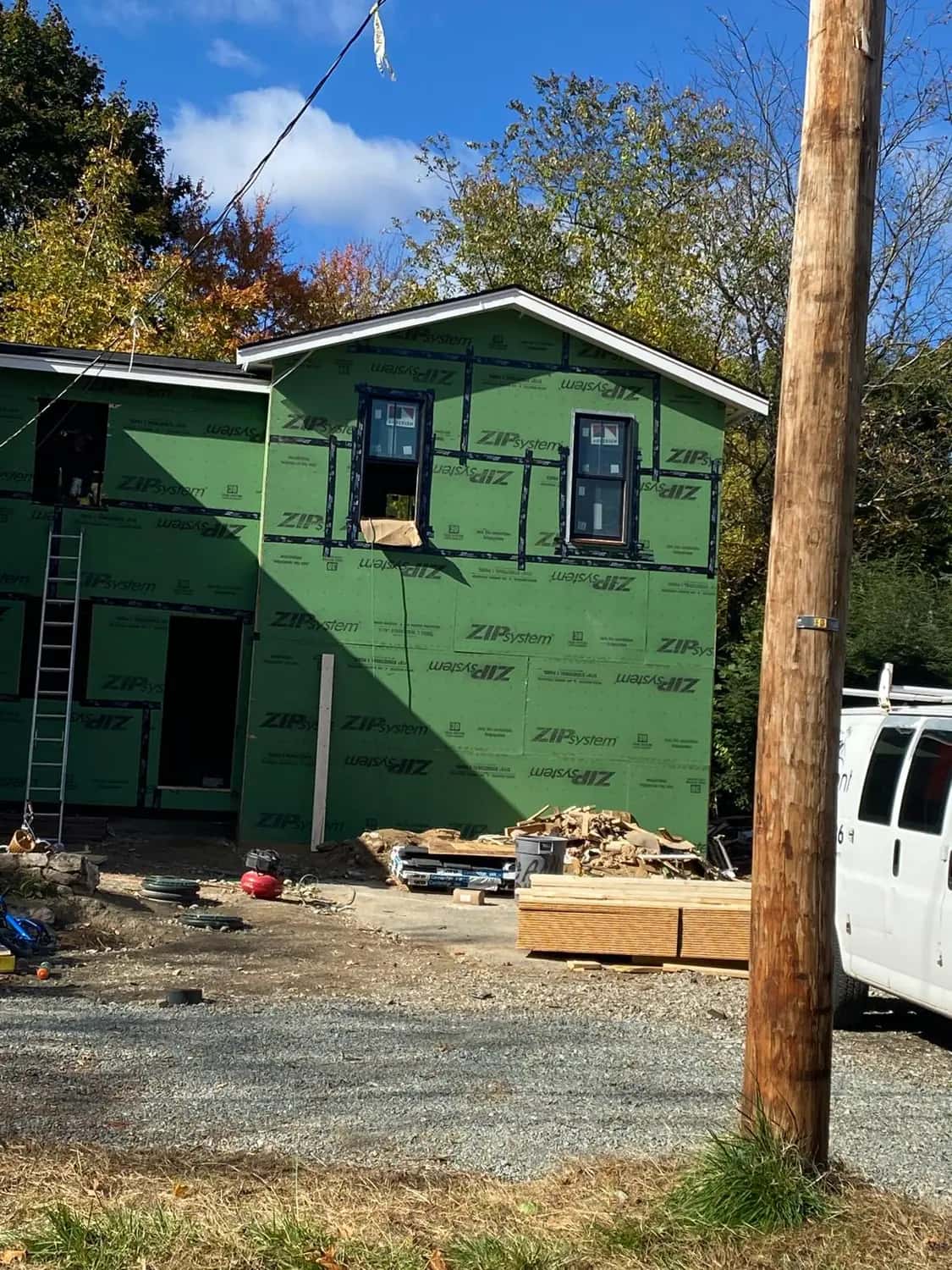
On our Lynnfield addition and exterior project, the new two-story addition was sheathed and taped before new white siding went on, as the photo at the top of this guide shows. We do siding work in Lynnfield and across our service area, including Westborough, where a client shared this:
“New siding and windows completely transformed the house. Professional from the estimate to the final walkthrough — highly recommend.”
Frequently asked questions
How long does siding replacement take?
Most single-family re-siding jobs take about 1 to 2 weeks of work once materials arrive. The size of the house, the material and repairs found under the old siding set the exact schedule.
Can new siding go over old siding?
Sometimes, but tear-off is usually the better choice. Going over old siding hides rot and skips the chance to repair sheathing and fix the weather barrier and flashing. Check the manufacturer's instructions and your building department.
What's the best time of year to replace siding in Massachusetts?
Siding can go on most of the year. Very cold days limit some steps: sealants and paints have minimum application temperatures, and vinyl is more brittle in deep cold. Spring through fall is easiest to schedule.
Will new siding lower my energy bills?
Siding by itself adds little insulation. Savings come from sealing air leaks and fixing the weather barrier during re-siding, or from insulated siding or rigid foam added under it.
Sources
- Remodeling 2025 Cost vs. Value Report: New England (JLC / Zonda Media)
- Cost vs. Value report data, free download (costvsvalue.com)
- Mass.gov: Lead-safe renovation for contractors (454 CMR 22.00)
Laws, codes and program rules change. This guide is general information, not legal advice; confirm the rules for your project with your town's building department or the state agency linked above.