Replace siding when damage is widespread rather than isolated: soft or rotted boards in several areas, panels cracked or warped across a whole wall, paint that fails within a few years, or moisture showing up inside. One or two damaged boards can usually be repaired; repeated failures usually mean water is getting behind the siding.
What are the signs your siding needs replacing?
- Soft, rotted or crumbling boards. Press a screwdriver into suspect spots near the bottom of walls, under windows and at corners. Soft wood means water has been getting in, so the sheathing behind it needs checking too.
- Cracked, warped or loose panels across a wall. A few cracked vinyl panels can be swapped. Buckling or cracking across a whole wall usually means the siding was nailed too tight to move, or it has reached the end of its life.
- Paint that peels within a few years. On wood siding, paint that keeps failing often points to moisture moving through the wall, not just a bad paint job.
- Signs of moisture inside. Peeling paint, stains or mold on the inside of exterior walls can mean water is getting into the wall. Have the cause found before choosing a fix.
- Gaps, holes and pest damage. Openings let water, insects and animals into the wall.
- Brittle vinyl. Fading alone is cosmetic. Vinyl that cracks when pressed in cold weather has become brittle and will keep breaking.
- Repairs every year. If you're patching the same walls every season, that money may be better spent on replacement that also fixes the weather barrier behind the siding.
Should you repair or replace your siding?
| What you see | What it usually means | Typical fix |
|---|---|---|
| One or two cracked or loose boards | Impact damage or a failed fastener | Repair: replace the damaged pieces |
| Soft wood under one window or at the base of one wall | A local leak, often missing or failed flashing | Repair the boards and the flashing, and check the sheathing |
| Soft spots or rot on several walls | Water getting behind the siding in many places | Replace, with a new weather barrier and flashing |
| Vinyl buckled or cracking across whole walls | Installed too tight, or brittle with age | Replace |
| Paint failing everywhere within a few years | Moisture moving through the wall, or old wood that no longer holds paint | Find the cause first; often replace |
If you're patching siding every year, you're paying for a replacement in installments.
What's behind your siding, and why does it matter?
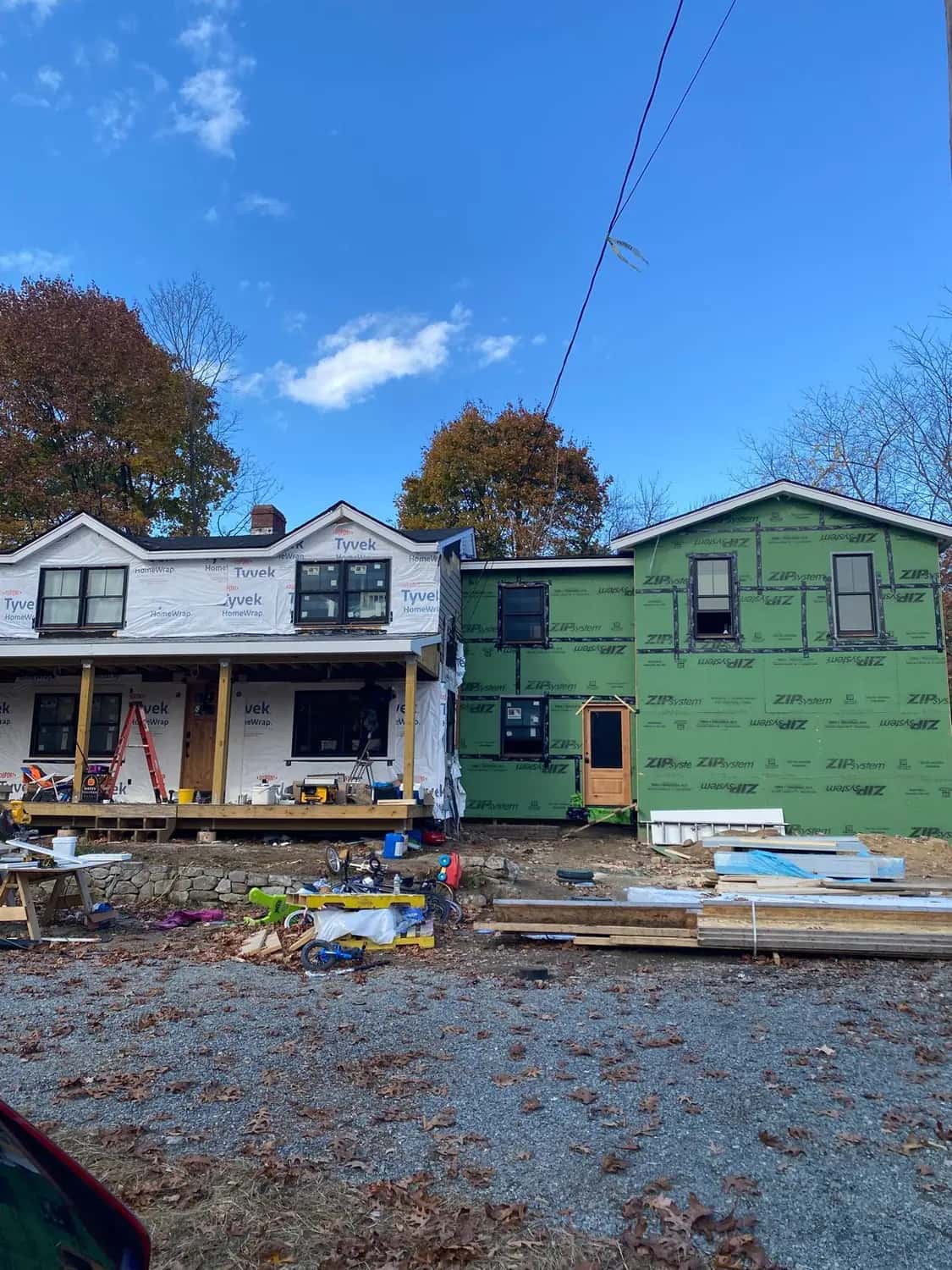
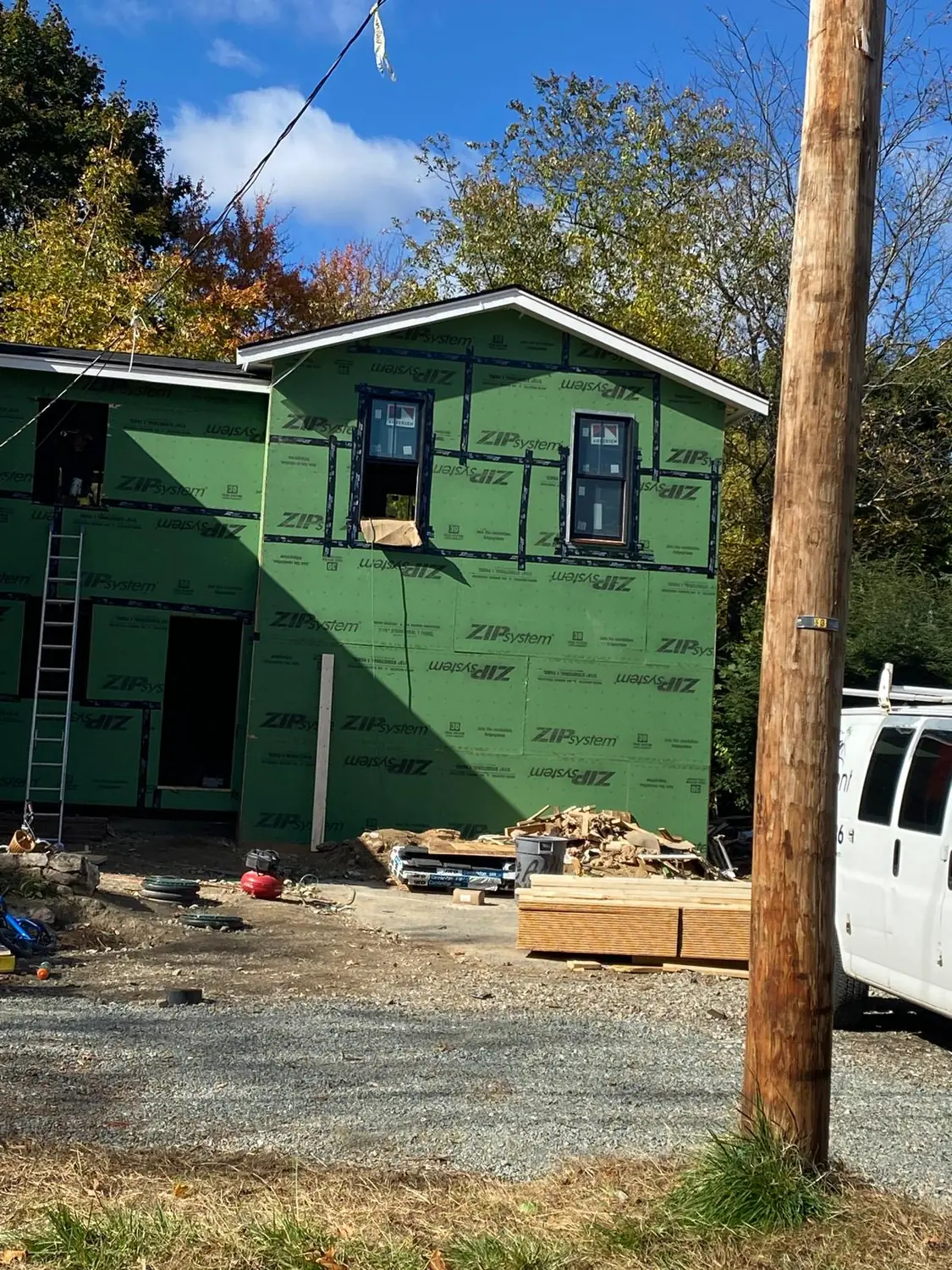
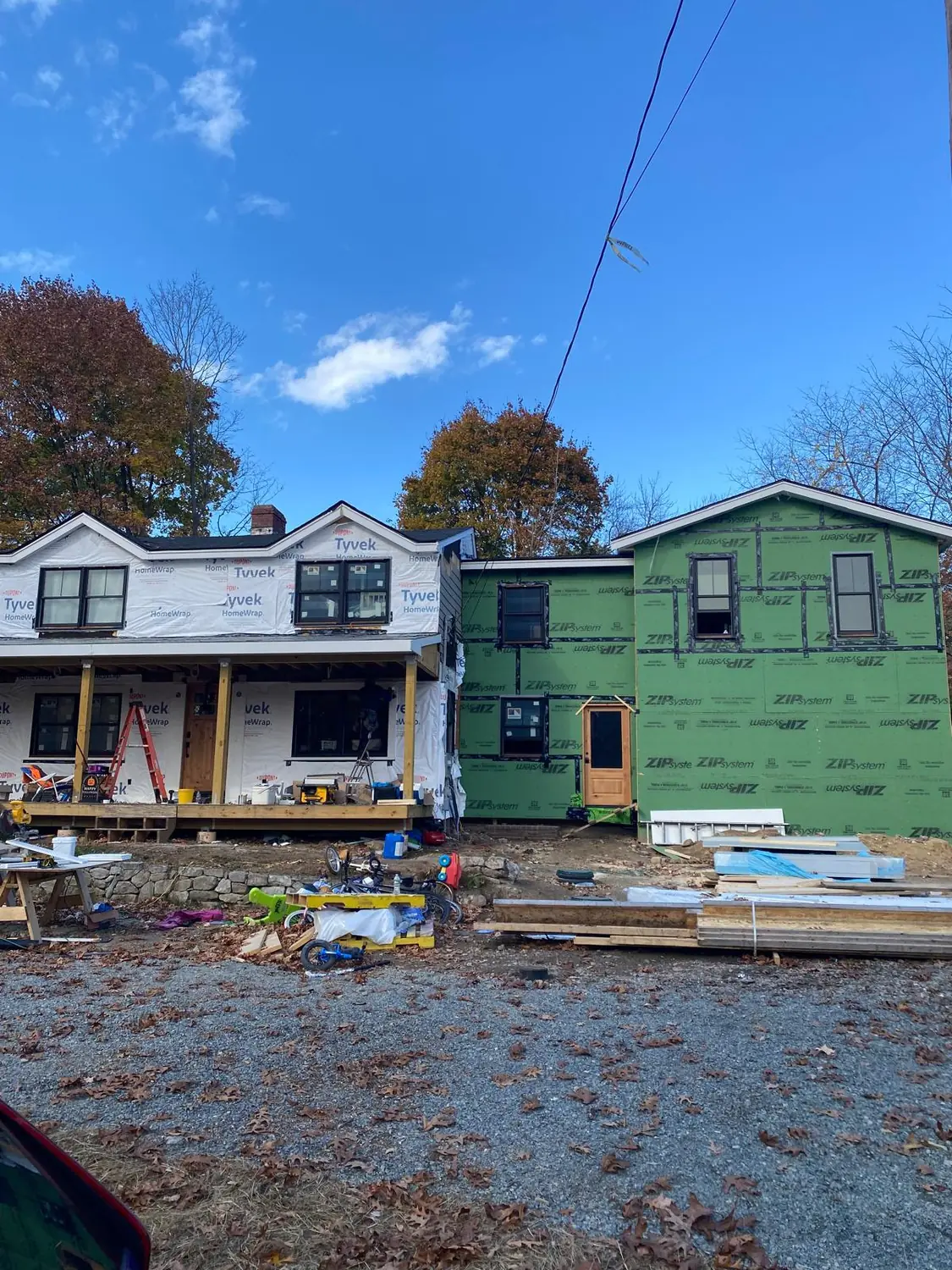
Siding is only the outer layer. Behind it are the sheathing (the wood panels nailed to the framing), a water-resistive barrier such as house wrap or taped sheathing, and flashing at every window, door and roof-to-wall joint. Those layers are what keep water and air out. Replacement is the time to inspect the sheathing and fix the barrier and flashing; patching the siding alone doesn't. The photo at the top of this guide shows that layer on our Lynnfield addition and exterior project before the siding went on.
Free estimate
Tell us about your project
Free and no-obligation. Prefer to talk? Call (508) 816-2726 (Mon–Sat, 7am–6pm).
- Itemized estimates
- 500+ projects completed
- Insured
Will new siding lower your energy bills?
Siding by itself adds little insulation. Comfort and energy improve when re-siding includes sealing air leaks and fixing the weather barrier, or when insulated siding or rigid foam is added under it. Ask what's included rather than expecting the siding itself to cut your bills.
What if your house was built before 1978?
Many New England houses have old painted siding or trim. In homes built before 1978, paid renovation that disturbs more than 6 square feet of painted surface per room inside, or more than 20 square feet outside, and any window replacement, must follow lead-safe work rules. In Massachusetts the company doing the work needs a Lead-Safe Renovation Contractor license from the Department of Labor Standards, with a certified renovator directing the job. That license is separate from Home Improvement Contractor registration and the Construction Supervisor License. Ask any contractor for their lead-safe license number before work starts. In New Hampshire, the federal EPA renovation rule applies instead.
What should you do next?
- Walk the house with a screwdriver and a flashlight and note where the problems are.
- Get the cause checked: a local leak gets a local repair.
- If replacement makes sense, read our siding replacement cost guide and our vinyl vs. fiber-cement comparison.
- Get a written contract. Massachusetts requires a written contract for home improvement work over $1,000 on an owner-occupied home. The deposit can't be more than one-third of the total price, or the cost of special-order materials if that is greater.
We repair and replace siding through our siding service, including siding in Northborough, where we're based, and in Westborough.
Frequently asked questions
Can you replace siding on just one wall?
Yes, if matching material is available. Exact color matches on faded vinyl or weathered wood are hard, so a single-wall replacement works best on a less visible side, or on painted wood that gets repainted afterward.
Does homeowners insurance cover siding damage?
Sudden damage from a storm or a falling tree is often covered; wear, rot and slow leaks usually aren't. Check your policy and talk to your insurer before work starts.
How long does siding replacement take?
Most single-family re-siding jobs take about 1 to 2 weeks of work once materials arrive.
Sources
- Mass.gov: Lead-safe renovation for contractors (454 CMR 22.00)
- Mass.gov: Home improvement contract requirements, details and sample language
- M.G.L. c.142A §2: requirements for home improvement contracts
Laws, codes and program rules change. This guide is general information, not legal advice; confirm the rules for your project with your town's building department or the state agency linked above.