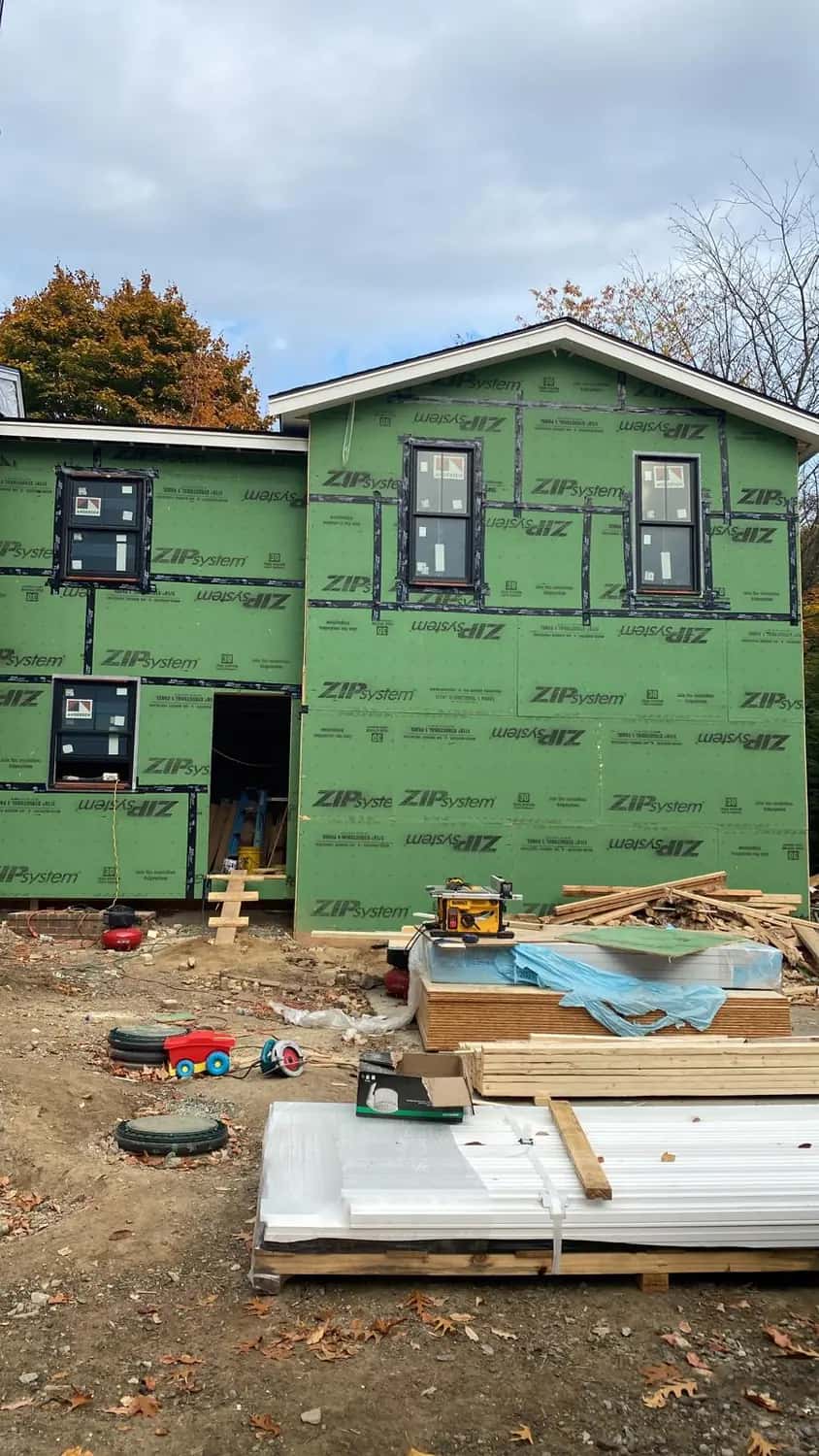
Usually, yes. Under the Massachusetts State Building Code, additions, decks, structural changes, re-siding, re-roofing and replacement windows generally need a building permit, and plumbing, gas and electrical work need separate permits pulled by licensed tradespeople. Purely cosmetic work, such as painting and flooring, typically doesn't. Your town's building department has the final word.
Which building code applies in Massachusetts?
Massachusetts has one statewide building code, 780 CMR, now in its 10th edition and based on the 2021 International Codes. One- and two-family homes fall under its residential volume, based on the 2021 International Residential Code with Massachusetts amendments. Towns enforce the code; they don't write their own building code. What does vary by town is zoning, wetlands review, historic districts, septic rules, energy-code options, fees and paperwork.
Which projects need a permit?
| Project | Building permit? | Other permits and reviews |
|---|---|---|
| Addition | Yes, with plans | Zoning; septic (Title 5) if adding bedrooms; Conservation Commission near wetlands; plumbing, gas and electrical permits |
| Deck | Yes for attached decks, and for most others | Zoning setbacks; footing, framing and final inspections |
| Re-siding | Usually, often a short-form permit | Lead-safe rules on pre-1978 homes; historic-district review where one applies |
| Replacement windows and doors | Usually, often a short-form permit | Energy code, egress and safety glass; lead-safe rules for any window replacement in a pre-1978 home |
| Re-roofing | Usually | Historic-district review where one applies |
| Kitchen or bathroom remodel | When walls or the structure change | Moving plumbing, gas or wiring needs separate permits pulled by the licensed trades |
| Painting, flooring, cabinets and counters replaced in place | Usually not | Lead-safe rules still apply to painted surfaces in pre-1978 homes |
Do you need a permit for a home addition?
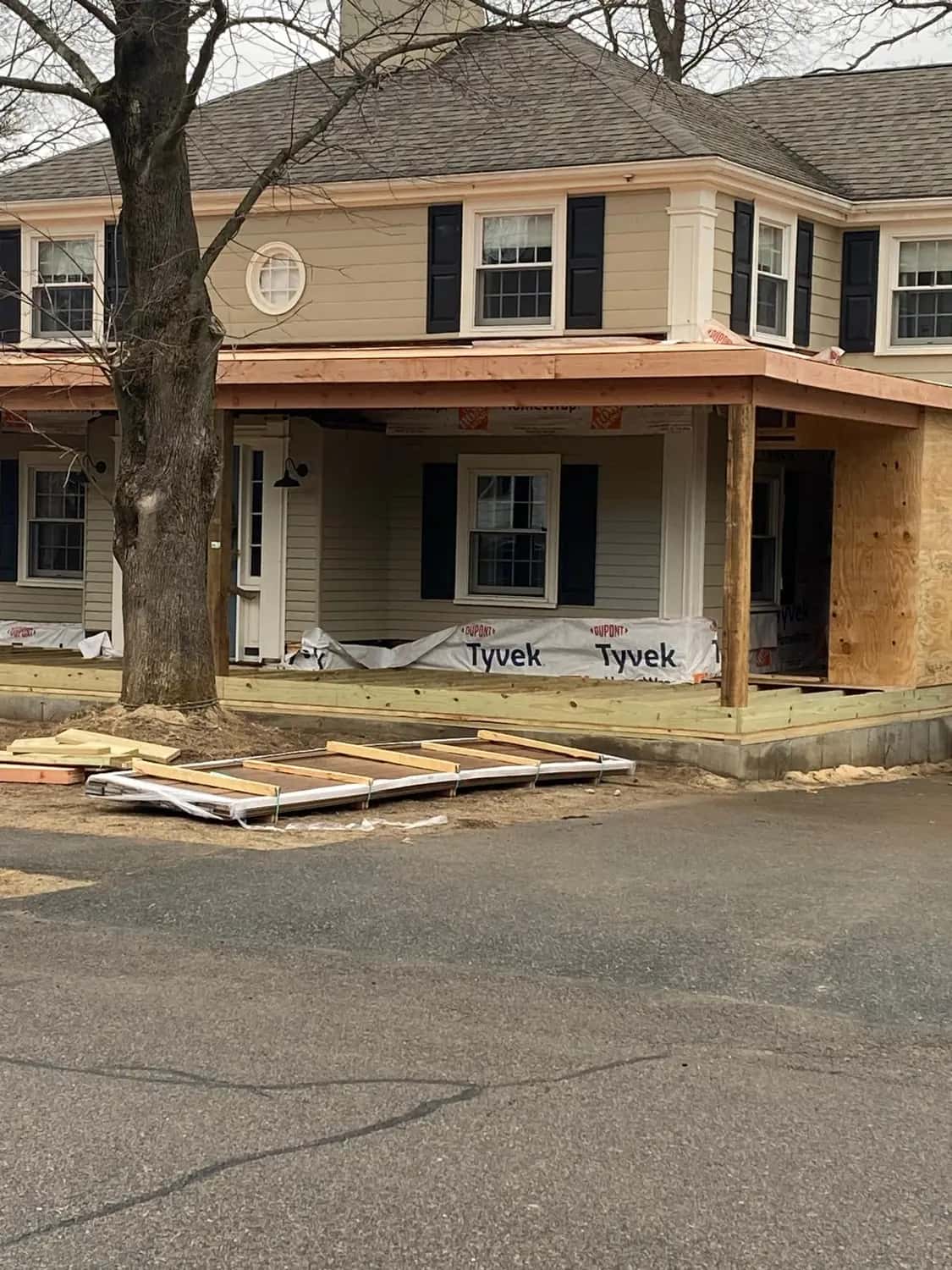
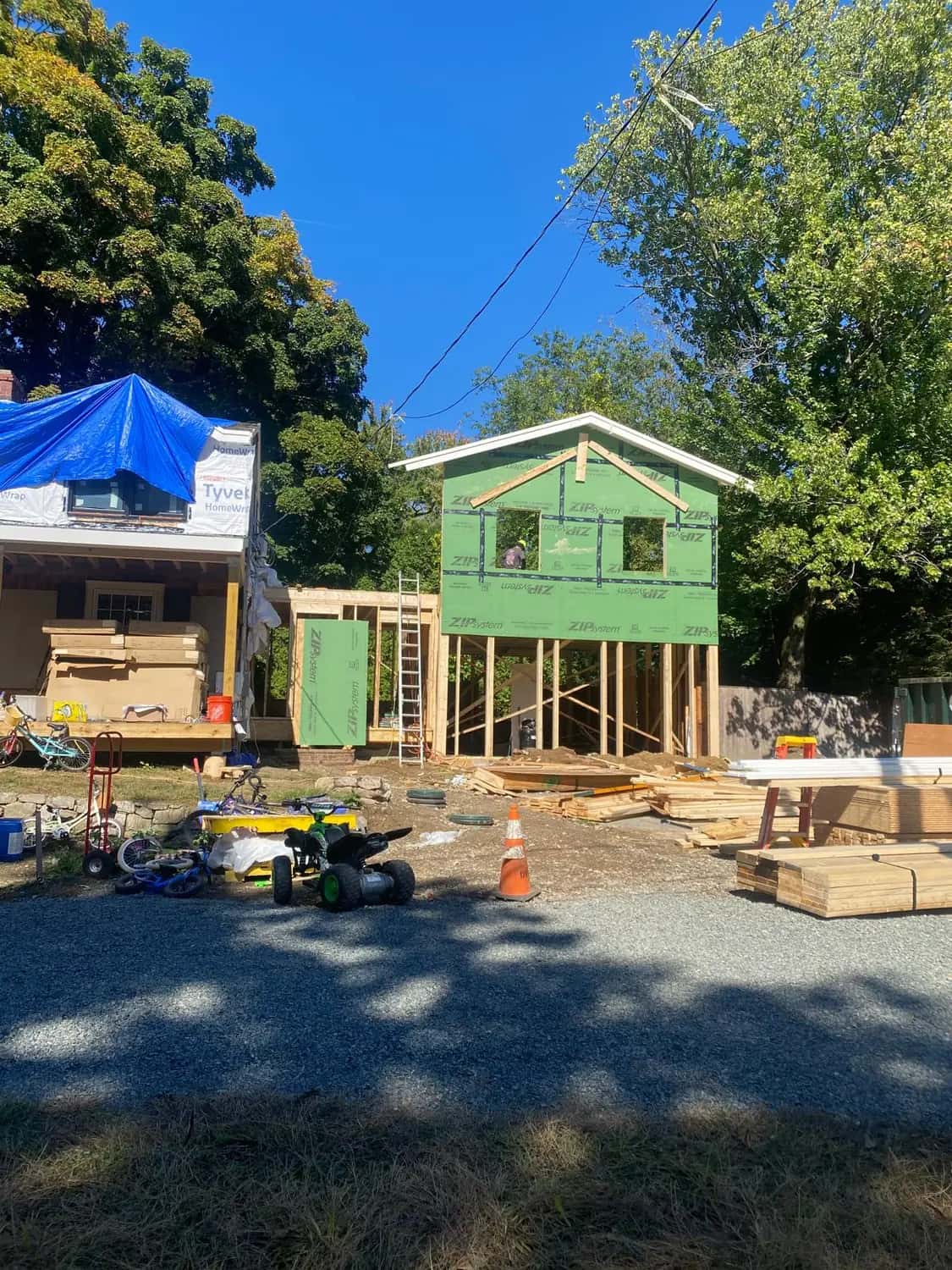
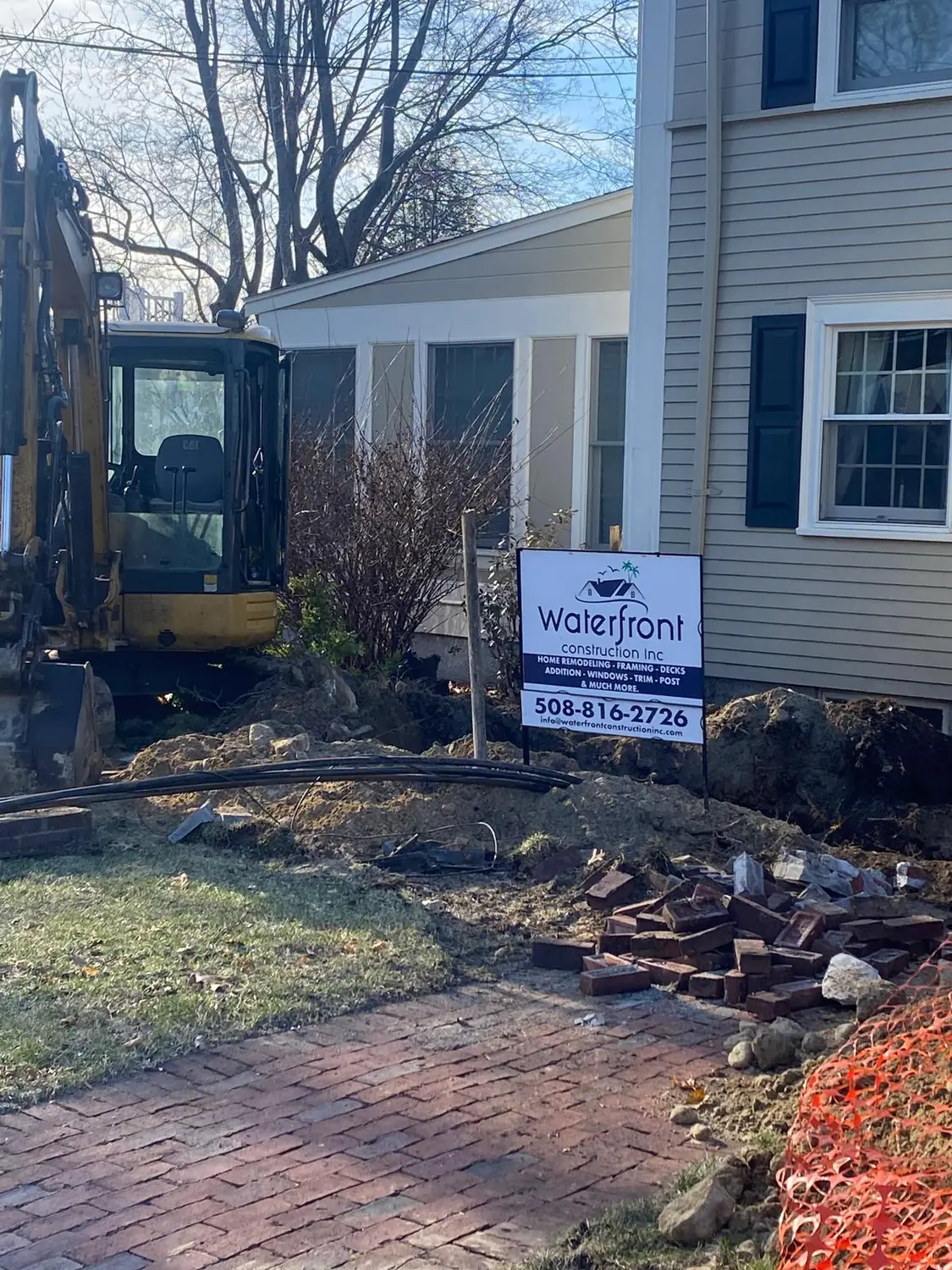
Yes. An addition needs a building permit with construction drawings, and often structural engineering. Before the building permit, check zoning (setbacks, lot coverage, height and any special permit for a nonconforming house), septic capacity under Title 5 if you're adding bedrooms on a septic system, and Conservation Commission approval for work near wetlands. Many towns have also adopted the stretch or specialized energy code, which adds energy requirements. Our Needham addition project shows the excavation and foundation stage of an addition. Our home addition cost guide covers what these add to the budget, and we build home additions in Needham and across our service area.
Do you need a permit for a deck?
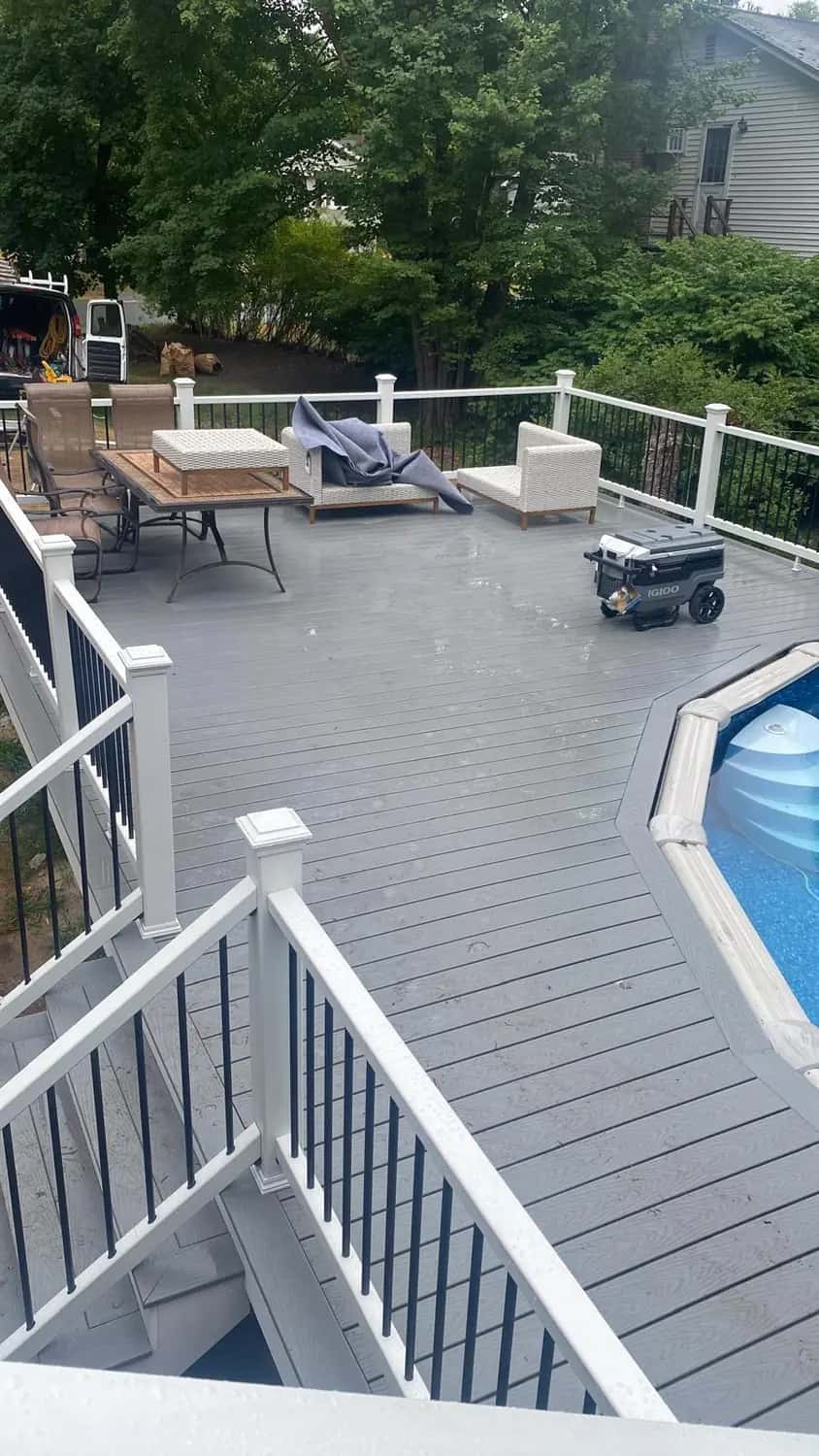
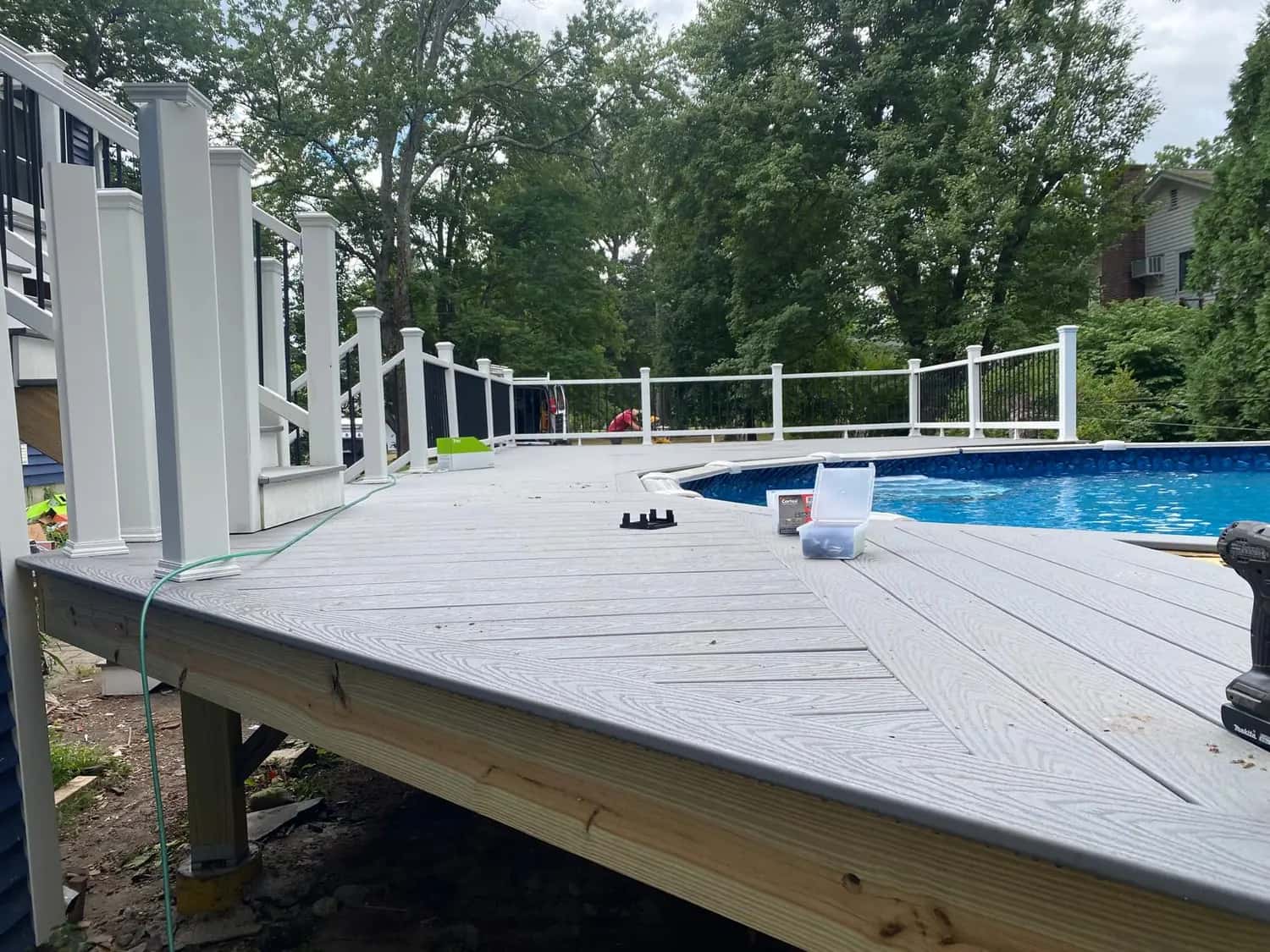
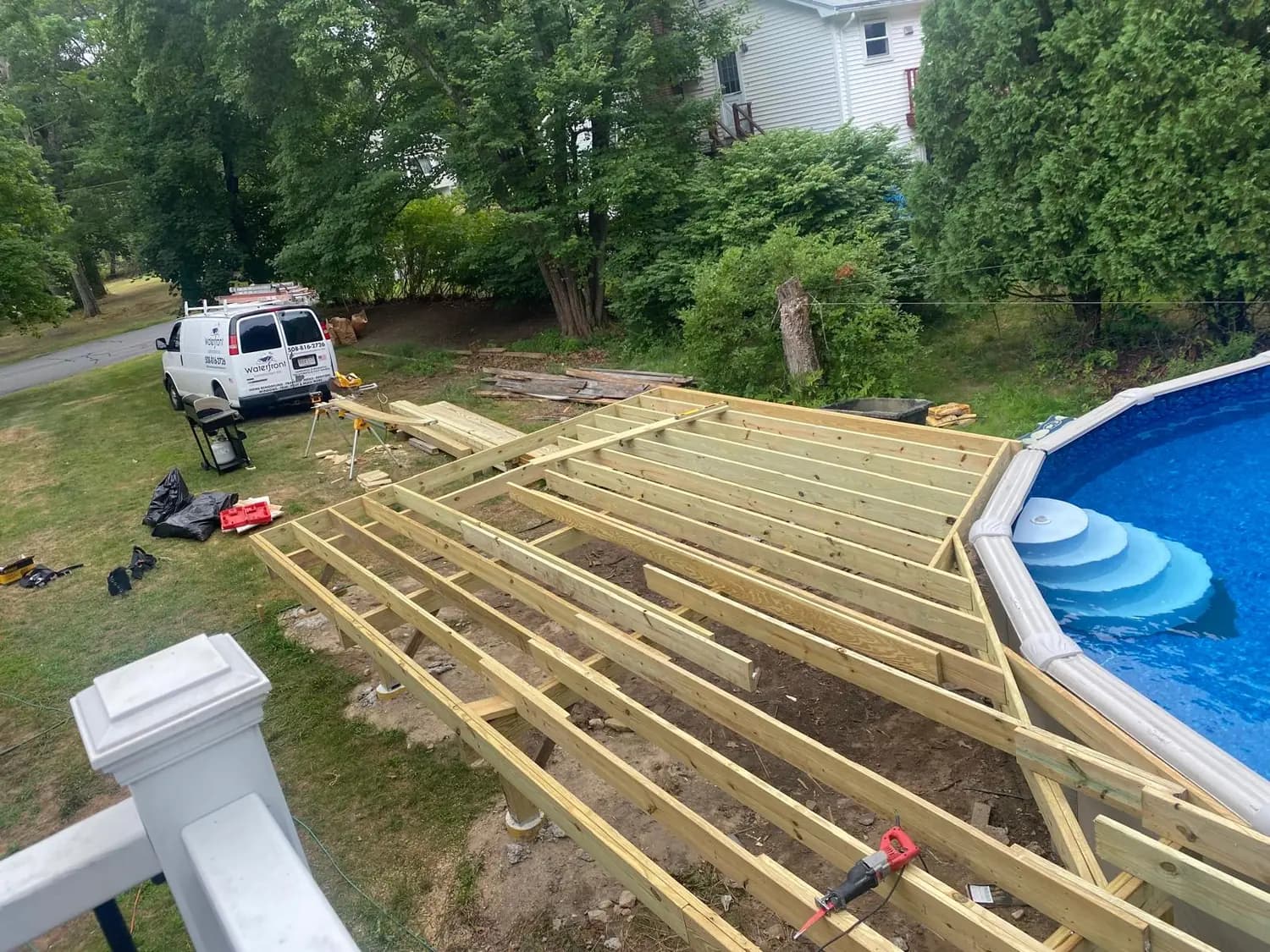
Attached decks need a building permit, and most freestanding decks do too. The building department typically inspects the footing holes, the framing and the finished deck. Footings must reach below the frost line, commonly 48 inches in Massachusetts; your building official confirms the local requirement. Zoning setbacks apply, and decks near wetlands may need Conservation Commission approval. See our deck cost guide, our deck service and the framing stage of our Salem, NH pool deck below.
Do you need a permit to replace siding?
Usually, yes. Most Massachusetts towns require a building permit for re-siding, often a short-form permit, taken out by a Construction Supervisor License holder. On a house built before 1978, removing painted siding or trim also falls under the lead-safe rules. See our siding replacement cost guide and siding service.
Do you need a permit to replace windows or doors?
Usually, yes, even when the new windows go in the same openings. Most towns require a building permit, often a short-form permit. New units must meet the energy code, a replacement in a bedroom's emergency escape opening must not make that opening smaller, and glass near doors, tubs and stairs must be safety glass. Any window replacement in a pre-1978 home falls under the lead-safe rules. See our window replacement cost guide and window replacement service.
Free estimate
Tell us about your project
Free and no-obligation. Prefer to talk? Call (508) 816-2726 (Mon–Sat, 7am–6pm).
- Itemized estimates
- 500+ projects completed
- Insured
Do kitchen and bathroom remodels need permits?
A remodel that moves walls or changes the structure needs a building permit. Moving plumbing, gas or wiring needs separate permits: plumbing and gas permits pulled by a licensed plumber or gas fitter, and an electrical permit pulled by a licensed electrician. Replacing cabinets, counters, tile or fixtures in place is usually treated as finish work, though any plumbing in a contractor's remodel is still done by a licensed plumber. See our kitchen remodel cost guide, bathroom remodel cost guide, kitchen remodeling service and bathroom remodeling service.
What work usually doesn't need a permit?
- Painting and wallpaper.
- Flooring.
- Replacing cabinets and countertops in place, without moving plumbing, gas or electrical.
- Minor repairs.
Lead-safe rules still apply to painted surfaces in pre-1978 homes even when no permit is needed. When in doubt, call your building department before work starts.
Who pulls the permit: you or your contractor?
The building permit should be taken out by the contractor's Construction Supervisor License holder, whose license number goes on the permit, along with the company's Home Improvement Contractor registration number. Plumbers, gas fitters and electricians pull their own trade permits. Permit applications also ask for proof of workers' compensation coverage, and a Massachusetts home improvement contract should state who obtains the permits.
Don't pull the permit yourself for work a contractor is doing. Homeowners who do generally lose access to the state's Home Improvement Contractor Guaranty Fund. Whoever you hire, the written contract should name who obtains each permit, and the building permit should carry the contractor's Construction Supervisor License number. Our pre-hire checklist covers what else to confirm before you sign.
What varies from town to town?
- Zoning: setbacks, lot coverage, height and the rules for nonconforming houses.
- Conservation Commission review for work near wetlands, streams and rivers.
- Local historic districts, where exterior changes need the commission's approval.
- Board of Health review and Title 5 septic rules.
- Whether the town adopted the stretch or specialized energy code.
- Permit fees, application forms and online portals.
Don't assume a neighbor's permit answer applies to your house. The building department and zoning office can tell you what applies to your lot.
What happens if you skip a permit?
Unpermitted work can complicate insurance claims and home sales, and a town can require finished work to be opened up for inspection or brought up to code. Fixing it later usually costs more than the permit would have.
How do permits work in New Hampshire?
New Hampshire has no statewide contractor license. Building permits come from each town's building department under the state building code, electricians and plumbers are licensed by the state, and the federal EPA renovation rule governs lead-safe work on pre-1978 homes. Requirements and fees vary by town, so check with the town's building department.
Frequently asked questions
Can I pull the permit myself to save money?
For work you do yourself, yes. When a contractor does the work, the contractor's Construction Supervisor License holder should pull it. Homeowners who pull the permit for a contractor's work generally lose access to the state's Guaranty Fund.
How long does a building permit take in Massachusetts?
It varies by town and project. Simple short-form permits can be quick; additions with zoning or Conservation Commission review take longer. Your building department can tell you its current timing.
Do I need a permit to replace deck boards?
Replacing boards in kind is often treated as a repair, but structural work, new stairs or new railings may need a permit. Ask your building department.
Do replacement windows need a permit even in the same openings?
Usually, yes. Most Massachusetts towns require a building permit for replacement windows, often a short-form permit.
Sources
- Mass.gov: 201 CMR 18.00, Home Improvement Contractor registration and enforcement
- M.G.L. c.142A §2: requirements for home improvement contracts
- Mass.gov: Home improvement contract requirements, details and sample language
- Mass.gov: Home Improvement Contractor program resources
- Mass.gov: Lead-safe renovation for contractors (454 CMR 22.00)
- SimplyWise: New Hampshire contractor license requirements
Laws, codes and program rules change. This guide is general information, not legal advice; confirm the rules for your project with your town's building department or the state agency linked above.