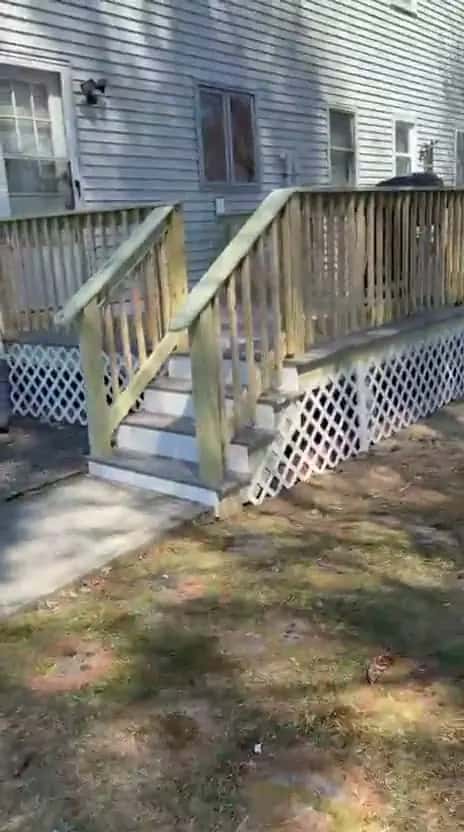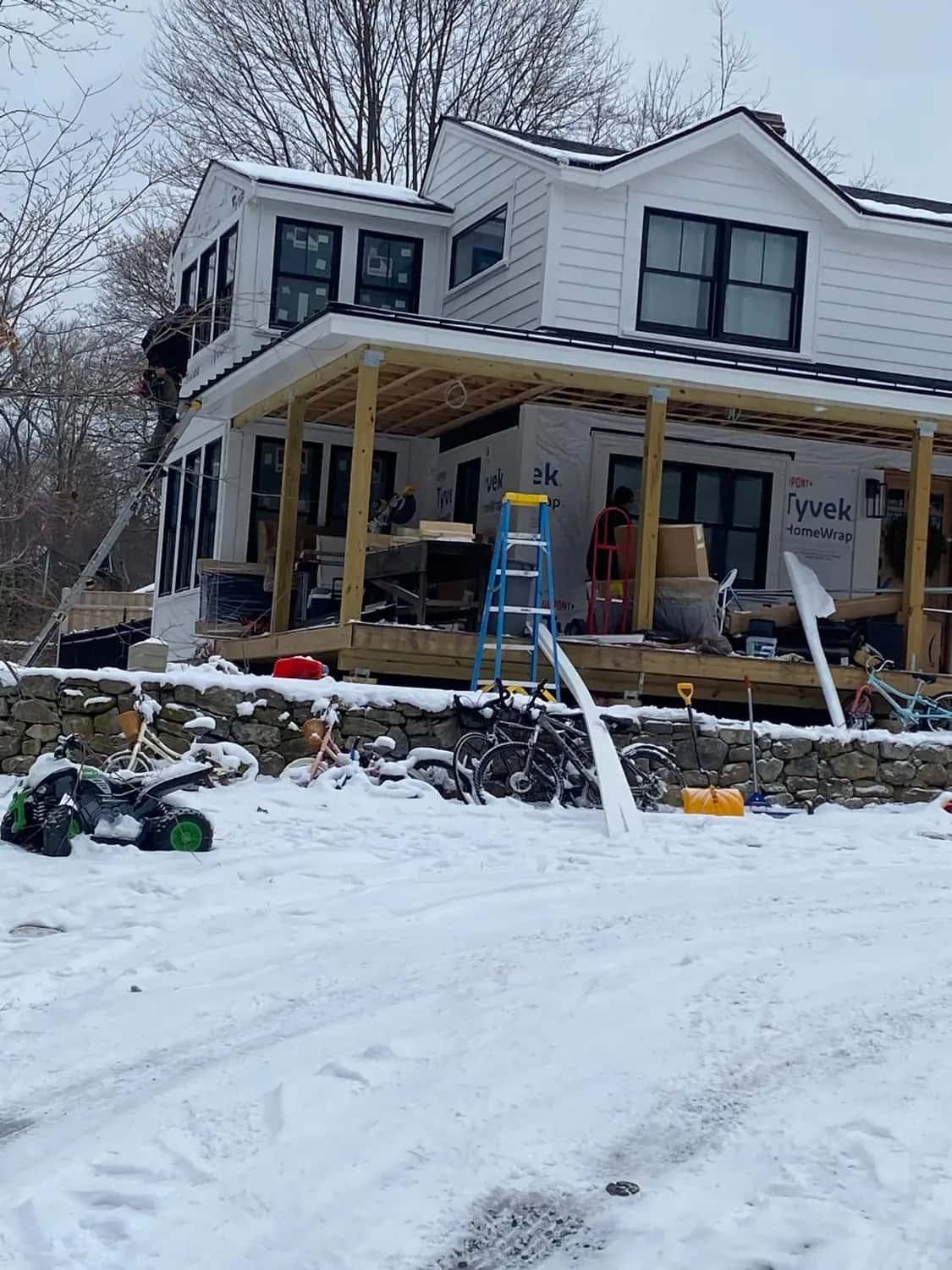
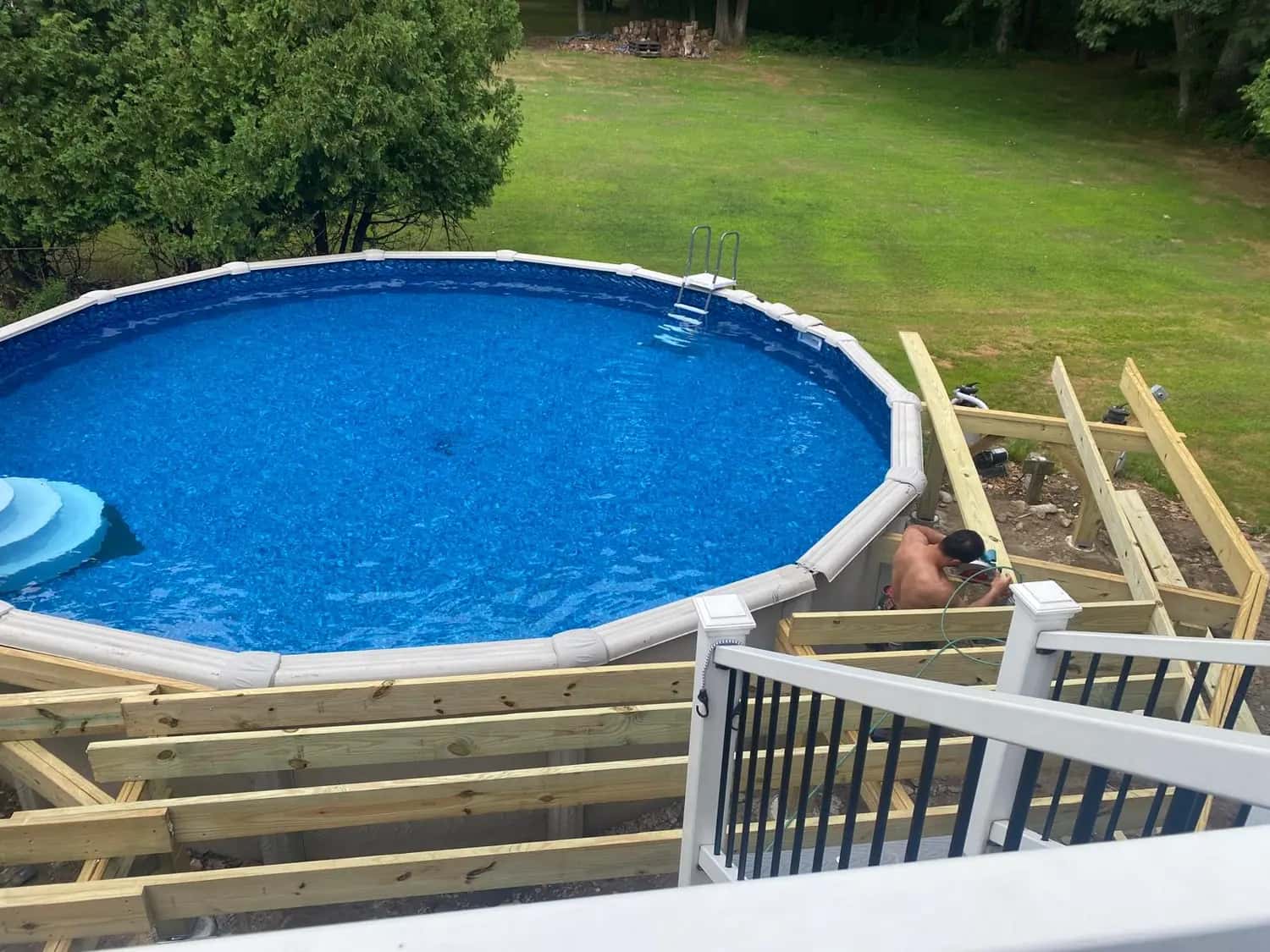
Most decks that get replaced did not need replacing, and a few decks that get repaired should have come down years earlier. The difference is not age and it is not how the boards look. It is whether the structure underneath — ledger, posts, footings and framing — is sound, because that is the part you cannot fix by spending a weekend on it.
What each option costs
Published 2026 data puts deck repair materials at roughly $3 to $45 per square foot depending on the deck type, with homeowners spending about $2,100 on an average repair. Full replacement runs about $30 to $55 per square foot. The useful ratio: once a repair passes roughly half the cost of replacement, replacement almost always wins on remaining life.
| Work | Typical cost | Buys you |
|---|---|---|
| Replace surface boards only | $8 – $25 / sq ft | 10–15 years if framing is sound |
| Re-secure or replace railings | $40 – $90 / linear ft | Code compliance and safety |
| Replace the ledger and flashing | $1,000 – $3,500 | Removes the main failure risk |
| Sister or replace joists | $1,500 – $6,000 | Structural life, not appearance |
| New footings / posts | $150 – $500 each | Fixes movement and frost heave |
| Full replacement | $30 – $55 / sq ft | New structure, new warranty |
The ledger board is the one that matters
The ledger is the board bolting the deck to the house. Nationally it is the single most common point of deck collapse, and the failures are almost never sudden — they are years of water getting behind a ledger that was nailed rather than bolted, or fastened without flashing above it.
What to look for: rust stains bleeding down the siding under the deck, a gap or a soft spot where the deck meets the house, nails rather than through-bolts or structural screws, and any absence of metal flashing over the top of the ledger. Push a screwdriver into the rim joist behind it. If it goes in, the deck is not safe to use.
A ledger can be replaced without replacing the deck, and it is worth doing. What cannot be fixed cheaply is a ledger that has been leaking long enough to rot the house's rim joist behind it — at that point you are doing carpentry on the house, not on the deck.
The other four checks
- Footings. In Massachusetts and New Hampshire, deck footings need to reach below the frost line — commonly four feet. A deck on shallow blocks will move every winter, and no amount of surface work stops that. If one corner has dropped, look underneath before spending anything.
- Posts at grade. A post sitting directly on soil or on a pad without a standoff wicks water and rots from the bottom. Check the base of every post with a screwdriver, not with your eyes.
- Joists and hangers. Look for rusted or missing hangers, hangers fastened with roofing nails instead of joist-hanger nails, and joists that are soft where they meet the ledger — the wettest spot on any deck.
- Railings. Push hard on the top rail. It should not move. Railing height and the spacing between balusters are code items, and an older deck frequently fails both — which matters at sale as well as for safety.
When repair is throwing money away
Repair makes sense when the frame is sound and the surface is tired. New decking over good joists is a genuinely good-value project, and composite over sound pressure-treated framing is one of the best value upgrades in exterior work — the composite versus wood comparison runs the numbers.
Replacement makes sense when the footings are wrong, when the ledger has been leaking into the house, when more than about a quarter of the joists are compromised, or when the deck was built without a permit to a layout that no longer meets code. In those cases every dollar of repair is buying time on a structure you will still be replacing.
There is also the age question. A pressure-treated deck built before the mid-2000s used a different preservative chemistry and different fastener standards, and galvanised hardware from that era corrodes faster against modern treated lumber. That is not automatic grounds for replacement, but it is a reason to look harder at the hardware.
Repairs still need permits, sometimes
Replacing surface boards on an existing deck is generally maintenance. Replacing structural members, changing the size or shape, rebuilding the ledger or replacing the deck outright is permitted work, with footing and framing inspections. How permitting works here sets out the distinction.
It is worth pulling the permit even when the line is blurry. A deck is the structure most likely to be looked at closely by a buyer's inspector, and an unpermitted rebuild is the kind of thing that stalls a sale at the worst moment.
What to ask before you decide
Ask any contractor to get under the deck and report on four things specifically: footing depth, ledger fastening and flashing, post bases, and hanger condition. A quote written from the top surface is a quote for the part of the deck that does not fail.
Ask what the rate is if rot is found in the rim joist once the ledger comes off — that is the discovery that turns a deck repair into house carpentry, and it should be priced before work starts rather than after.
We repair and build decks across MetroWest, Greater Boston and Southern New Hampshire, and we will tell you honestly when a repair is the better spend — see deck design and construction, or read what a new deck costs and how to plan one.
Where these figures come from
- Angi — Deck Replacement or Repair Cost
- HomeGuide — Deck Repair Cost
- Fixr — Deck Repair Cost
- Angi — Signs Your Deck Needs to Be Replaced
Published market data for Massachusetts and Greater Boston, not Waterfront Construction pricing. Your own project is quoted from a site visit — get a free estimate.
Frequently asked questions
Should I repair or replace my deck?+
Repair if the frame, footings and ledger are sound and only the surface is tired. Replace if footings are above the frost line, the ledger has been leaking into the house, or more than about a quarter of the joists are compromised. Once a repair passes half the cost of replacement, replacement wins.
How do I know if my deck is unsafe?+
Check the ledger where the deck meets the house — rust stains on the siding, a soft rim joist, nails instead of through-bolts, or no flashing above it. If a screwdriver pushes into the rim joist behind the ledger, stop using the deck and have it looked at.
Do deck repairs need a permit in Massachusetts?+
Replacing surface boards is generally maintenance. Replacing structural members, rebuilding the ledger, changing the size or replacing the deck is permitted work with footing and framing inspections. Your building department has the final say.
Deck Design & Construction in Northborough & MetroWest, MA →
Custom decks and outdoor living spaces in composite or wood — the perfect extension of the home you already love.
See our decks services →Ready to start your project?
Free, no-obligation estimate — we reply within one business day.